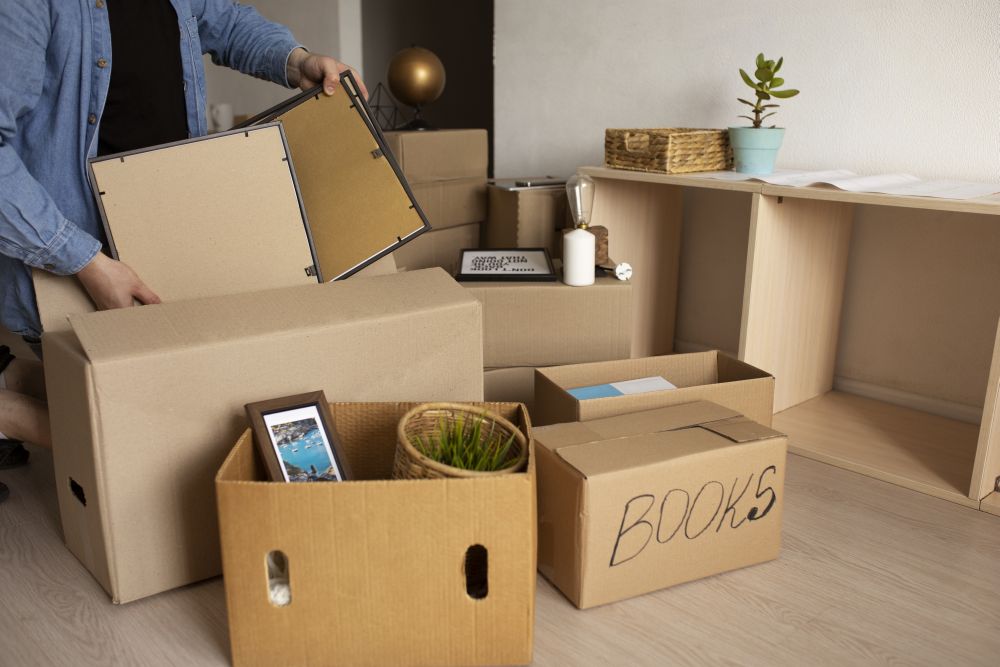
Most people treat a clear-out as a single afternoon of carrying things downstairs, and then discover that the carrying was the easy part. The difficult part is everything around it: deciding what goes, finding out where it is allowed to go, and arranging a vehicle and a pair of hands at the right hour. Anyone with junk to clear from a flat, a storeroom or a shop unit will get a better result by treating the job as a small project with a sequence, not as a burst of effort on a free Saturday.
Start With a Walk-Through, Not a Skip
Before anything is moved, walk through every room with a notebook and record what is leaving. Group items roughly by type: furniture, appliances, loose boxes, garden or balcony items, and anything that might be hazardous. This takes under an hour for most homes and it changes the whole job, because a removal crew can quote accurately only when they know volume and type.
Sort Into Four Piles
The simplest working system is four categories: keep, give away, sell and dispose. Be strict about the first one, since indecision is what makes a clear-out drag across several weekends. Items for donation or sale should have a deadline attached, after which they move to the disposal pile automatically. Mark each pile with coloured tape or sticky notes so that helpers and collectors do not have to ask. The disposal pile is the only one the removal team needs to see.
Measure the Volume Honestly
Removal work is usually priced by how much lorry space the load occupies, with adjustments for weight and labour. Estimating in vague terms such as “a few things” leads to a second trip and a second charge. Photograph each pile from two angles with something of known size in the frame, such as a dining chair. If a mattress, wardrobe or piano is involved, list it separately with its dimensions.
Decide What You Can Handle Yourself
Small quantities of ordinary household rubbish can go out through the usual refuse chute or bin centre, and HDB residents can ask their town council about its limited free removal of bulky items. Beyond that, self-disposal means hiring a van, lifting heavy objects and finding a facility that accepts them. For anything more than a handful of pieces, booking a licensed junk removal team is normally quicker and safer, because the crew brings the labour, the vehicle and the knowledge of where each type of waste is accepted.
Check Building Rules Before You Book
Condominiums, commercial buildings and some HDB blocks have rules that affect the timing. Management offices may require advance notice, a refundable deposit, lift padding, or work restricted to certain hours and days. Loading bays often need to be reserved, and some estates do not permit lorries above a certain height into the basement. Ask the management for these conditions in writing and pass them to the removal company, so that the crew arrives with the right vehicle and paperwork.
Prepare the Items for Lifting
Preparation on your side shortens the visit and can reduce the labour component of the bill. Empty drawers and cupboards, since loaded furniture is heavier and may shed its contents on the stairs. Defrost and dry fridges a day ahead. Disconnect washing machines and drain the hoses. If a large piece will not pass through the door, tell the company, as dismantling takes tools and time that should be planned.
Separate Anything That Needs Special Handling
Certain items cannot simply be thrown in with general waste. Electrical and electronic waste falls under a separate regulated collection scheme in Singapore, and things such as paint, solvents, gas cylinders and fluorescent tubes need careful treatment. Set these aside in a clearly marked corner and mention them when you ask for a quote. A company that knows about them in advance can plan the correct route for each, and you avoid a refusal at the door on collection day.
Confirm the Quote and What It Covers
Ask for the price in writing with the assumptions stated: the volume, the floor level, whether there is lift access, whether dismantling is included, and how much waiting time is allowed. Clarify what happens if the load turns out larger than the photographs suggested. It is also reasonable to ask whether the collector is licensed by the National Environment Agency as a general waste collector, since licensed collectors are the ones permitted to carry waste to authorised disposal facilities.
Manage the Day Itself
On the day, keep corridors and the route to the lift clear, and move cars if the loading point is tight. Have one person present who can make decisions, so that the crew is not left guessing whether a borderline item is staying. Walk through each room with the team leader before loading begins and again after it ends. Check walls, door frames and lift interiors for scuffs while the crew is still on site, as issues are far easier to settle then.
Choosing How to Proceed
A clear-out goes smoothly when the thinking happens before the lifting. If the load is a few bags and one small item, the building’s own refuse arrangements or the town council may be enough. If it involves furniture, appliances, several rooms or a deadline such as a tenancy handover, list the items, photograph them, confirm the building rules and request a written quote from a professional clearance crew in Singapore.